


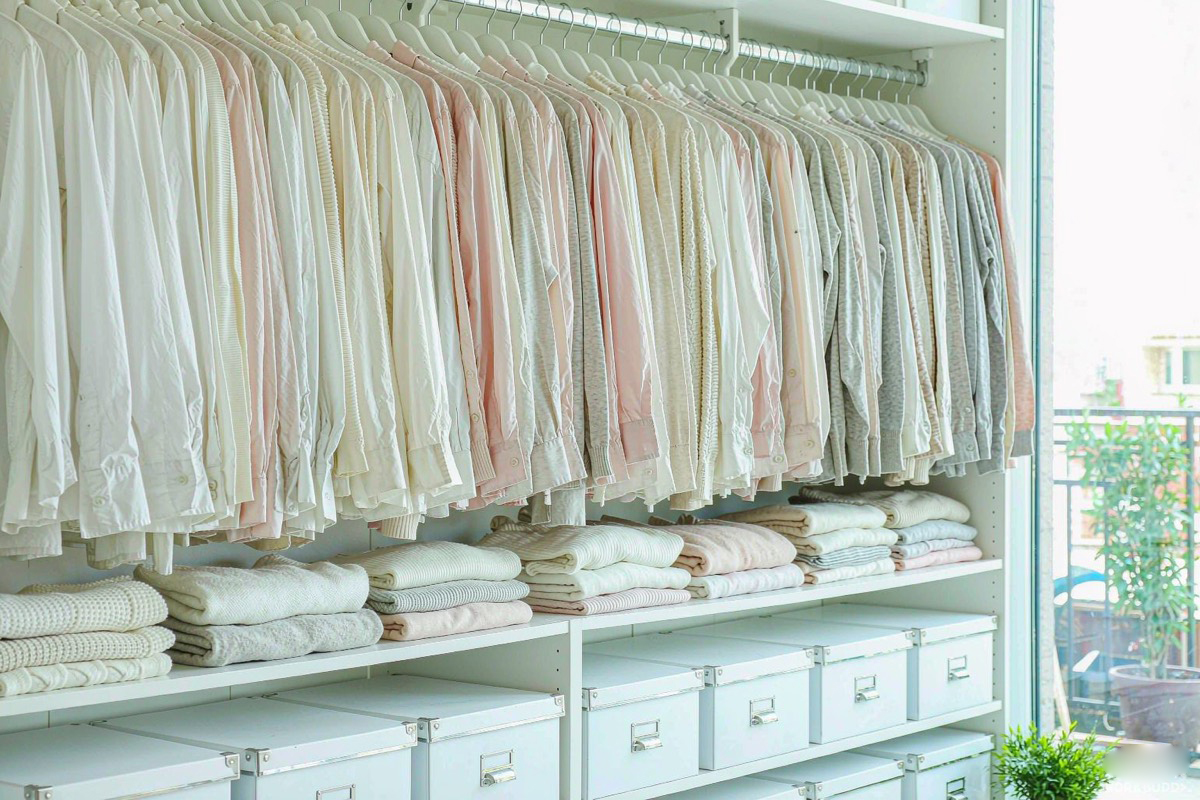
Many people think clothes don't fit because the closet is too small, but it's actually the opposite—80% of a cloakroom is wasted on inefficient placement methodsWith the same closet, someone who knows how to organize can fit 30% more clothes, without having to rummage through everything every time.
Step 1: Empty it out and give the closet a "checkup"
Take all the clothes out of the closet and lay them on the bed or a floor mat. This step may seem exaggerated, but it is a standard action when professional organizers make house calls. Only by emptying everything can you see the total amount of your clothing, and only then can you discover the clothes pressed at the very bottom that you haven't touched in a year.
For items not worn for more than a year, put them in a separate box and seal them away for 3 months first; if you still haven't thought of them by then, deal with them decisively;
For pilled, deformed, or faded items, put them in the discard pile;
For items with sentimental value but no longer worn, store them separately so they don't take up the frequently used area.
Step 2: Categorize by "frequency of use" rather than "season"
Most people are used to sorting clothes by season, but a more scientific way is to divide them into three layers by frequency of use:
Golden zone (from eye level to waist):Put tops, pants, and frequently worn outerwear that you wear every week, within easy reach;
Secondary access zone (below the waist):Put less frequently worn casual wear and loungewear;
Storage zone (top of the closet):Put off-season clothing, down jackets, and spare bedding, using transparent storage boxes with labels.
Step 3: Put things back, and using the right tools is key
Uniform hangers
Hangers of varying thickness are one of the culprits behind a messy closet. Switch uniformly to flocked hangers or the same style of wet-and-dry dual-use hangers, and hanging capacity immediately increases by 20%, while clothes are also less likely to slip off.
Upright folding method
Do not stack T-shirts and jeans into a tower. Learn from organizers'upright foldingfold them into blocks that can "stand upright" and insert them into drawers like files, so taking out one item won't mess up a whole section.
Vacuum bags only for low-frequency clothing
Use vacuum compression bags for down jackets and quilts, but do not compress sweaters that are washed and changed frequently—compressed fibers need time to rebound, which instead affects wearing.
When is it recommended to hire an organizer for a house call?
If your cloakroom is more than 3 square meters, you have more than 200 items of clothing, or it returns to its original messy state a week after repeated organizing, a more efficient way is to hire a professional team. Organizers not only help you put things back, but also replan the closet zones according to your movement habits and teach you methods to maintain it. Organize once, benefit long term.
Book an on-site assessment: 16621783413 (same number on WeChat) | Official website www.snbvip.cn